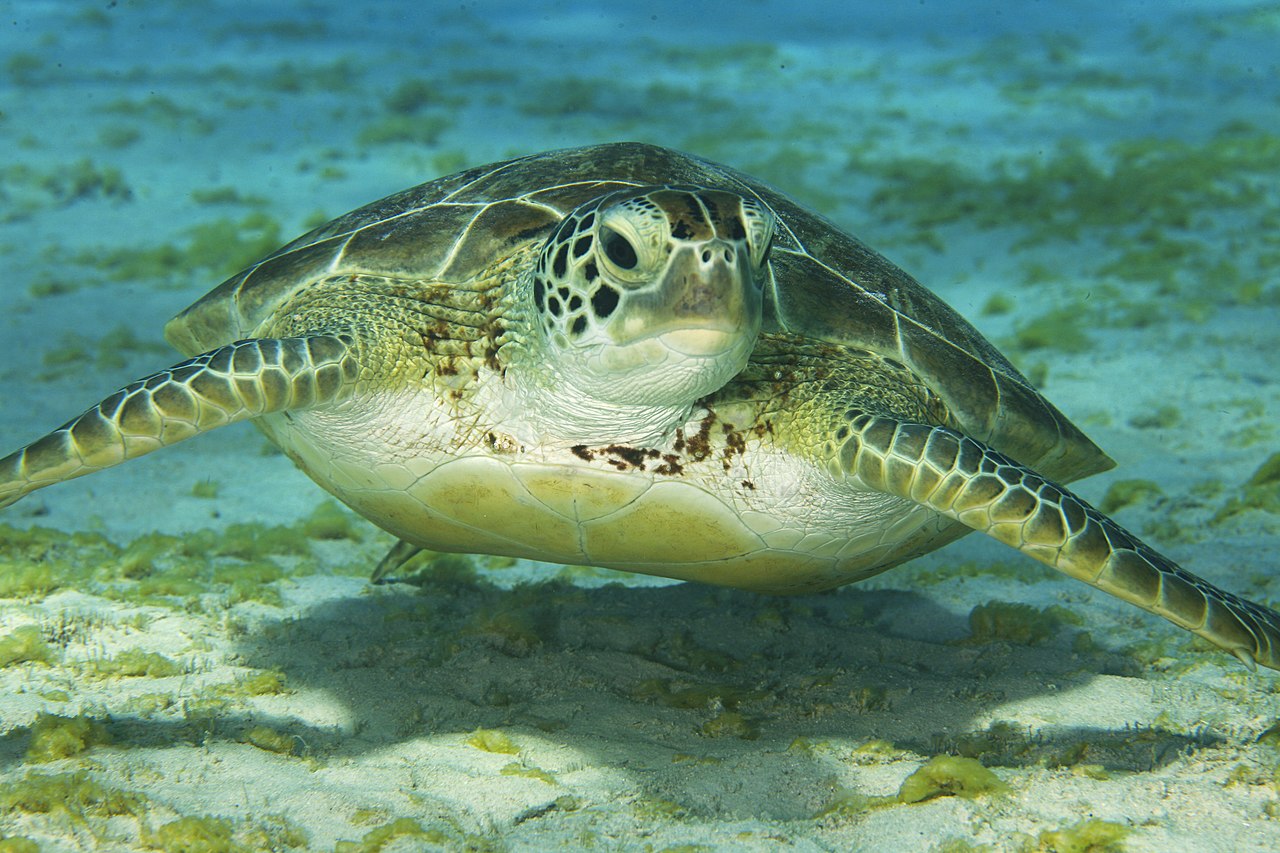

Adaptations
A streamlined ridged body and long front flippers support efficient ocean travel. Large size, insulating tissues, heat exchange in the limbs, and active muscles help retain warmth, while backward-pointing structures in the throat assist with swallowing slippery prey.
Behavior and daily life
Leatherbacks roam through ocean basins in search of gelatinous prey and can make deep, prolonged dives. Mature females return to sandy beaches to lay several clutches in a season, but hatchlings and adults spend nearly all other time at sea.
Conservation
Current profile labelEndangered under the U.S. Endangered Species Act; global populations vary
Fishing bycatch, entanglement, marine debris, vessel strikes, egg collection, coastal development, and warming nesting beaches all create risk. Trends differ sharply among ocean populations, so a single global shorthand can hide urgent regional declines.
Instead of a hard shell covered by large scales, a leatherback has a flexible, leathery carapace strengthened by many small bones and marked by seven ridges.