
Adaptations
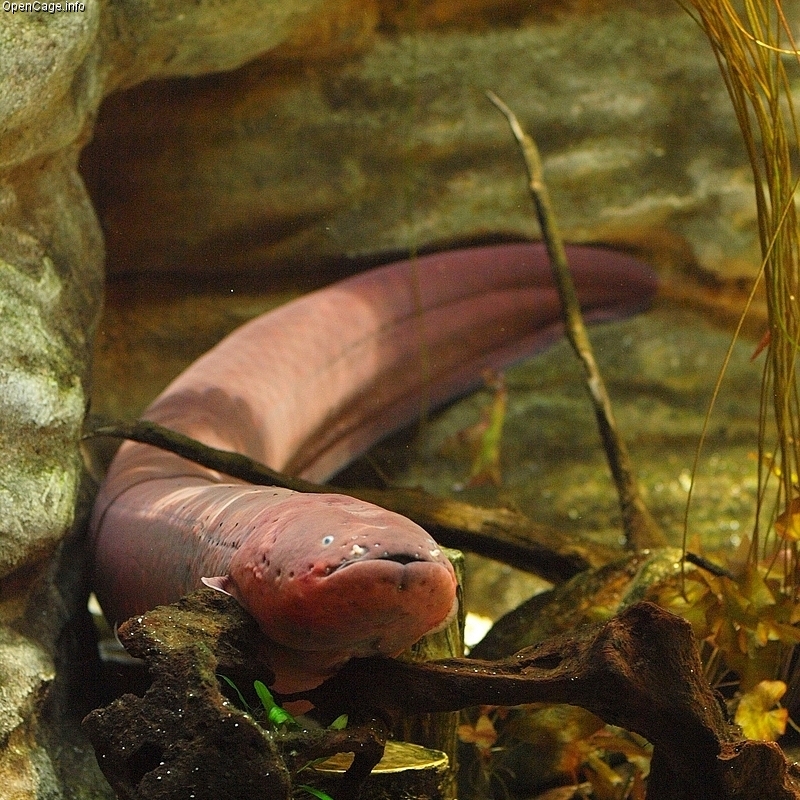
Three electric organs occupy most of the long body and contain stacked electrocytes that discharge together. Weak fields assist navigation in murky water, stronger pulses affect prey or threats, and frequent air breathing supports life in warm, oxygen-poor habitats.
Behavior and daily life
The fish rises regularly to gulp air and obtains most of its oxygen through a specialized lining in the mouth. During hunting it can emit pulse sequences that cause hidden prey to twitch, revealing a location before a stronger strike.
Conservation
Current profile labelLeast Concern for Electrophorus electricus
The focal species has a broad freshwater range, but wetland conversion, dams, mining pollution, and altered water flow can damage local habitat. Taxonomic changes mean records should identify which Electrophorus species actually occurs at a site.
An electric eel produces both weak pulses for sensing and communication and much stronger discharges that can reveal, stun, or deter other animals.


