

Adaptations
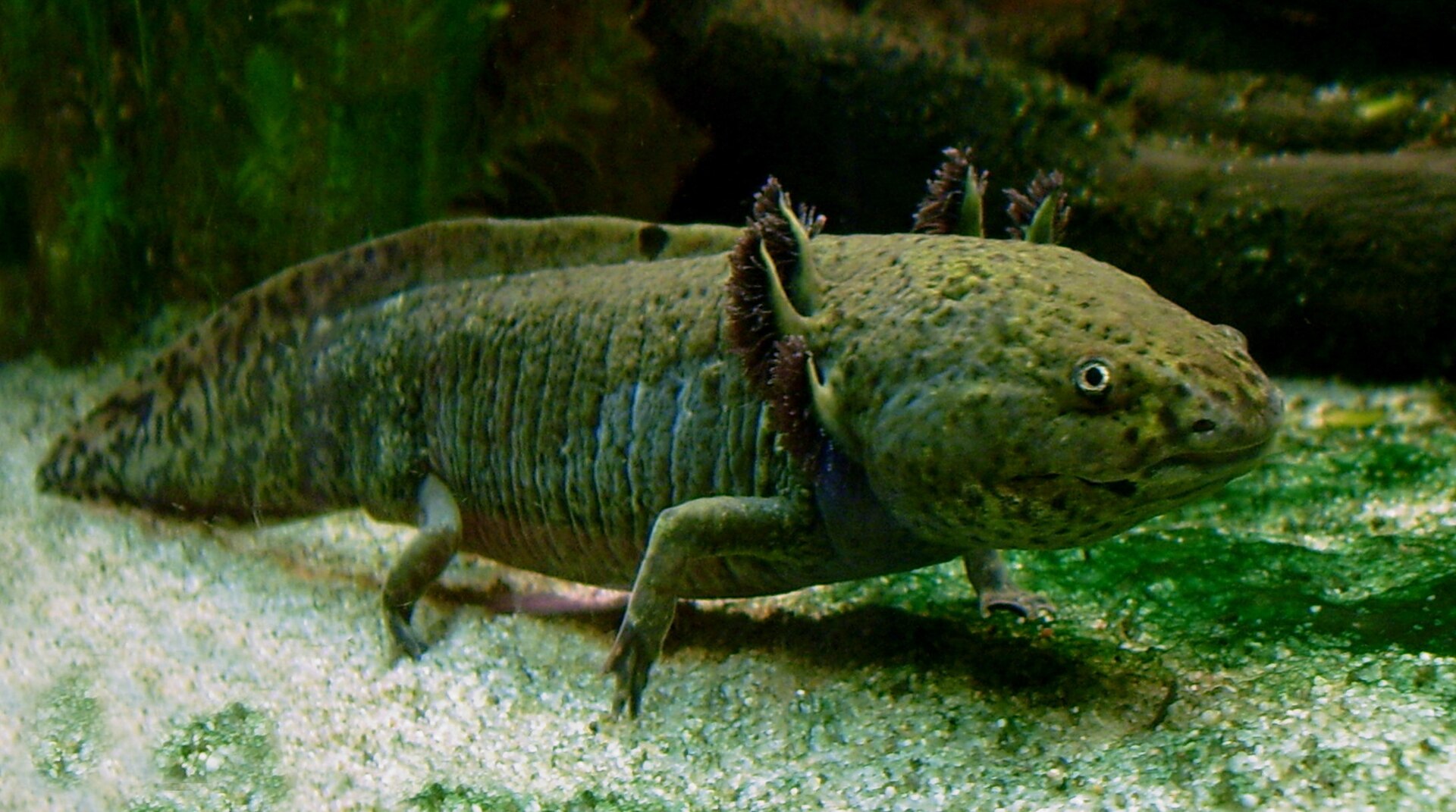
A broad flattened body fits beneath submerged rocks, and mottled skin blends with the streambed. Poor eyesight is offset by sensory structures that detect movement, while extensive skin folds support gas exchange in well-oxygenated flowing water.
Behavior and daily life
Adults are generally solitary outside the breeding period and feed by waiting for fish, crustaceans, amphibians, or other available prey. Males occupy underwater nesting burrows, where a guarding male may protect eggs and circulate water around them.
Conservation
Current profile labelNear Threatened
Dams, channel modification, sediment, pollution, and barriers to movement can degrade connected stream habitat. Hybridization with introduced Chinese giant salamanders also complicates conservation and identification in parts of Japan.
Wrinkles along the body increase the skin surface available for absorbing oxygen from cold, moving water.


.jpg)