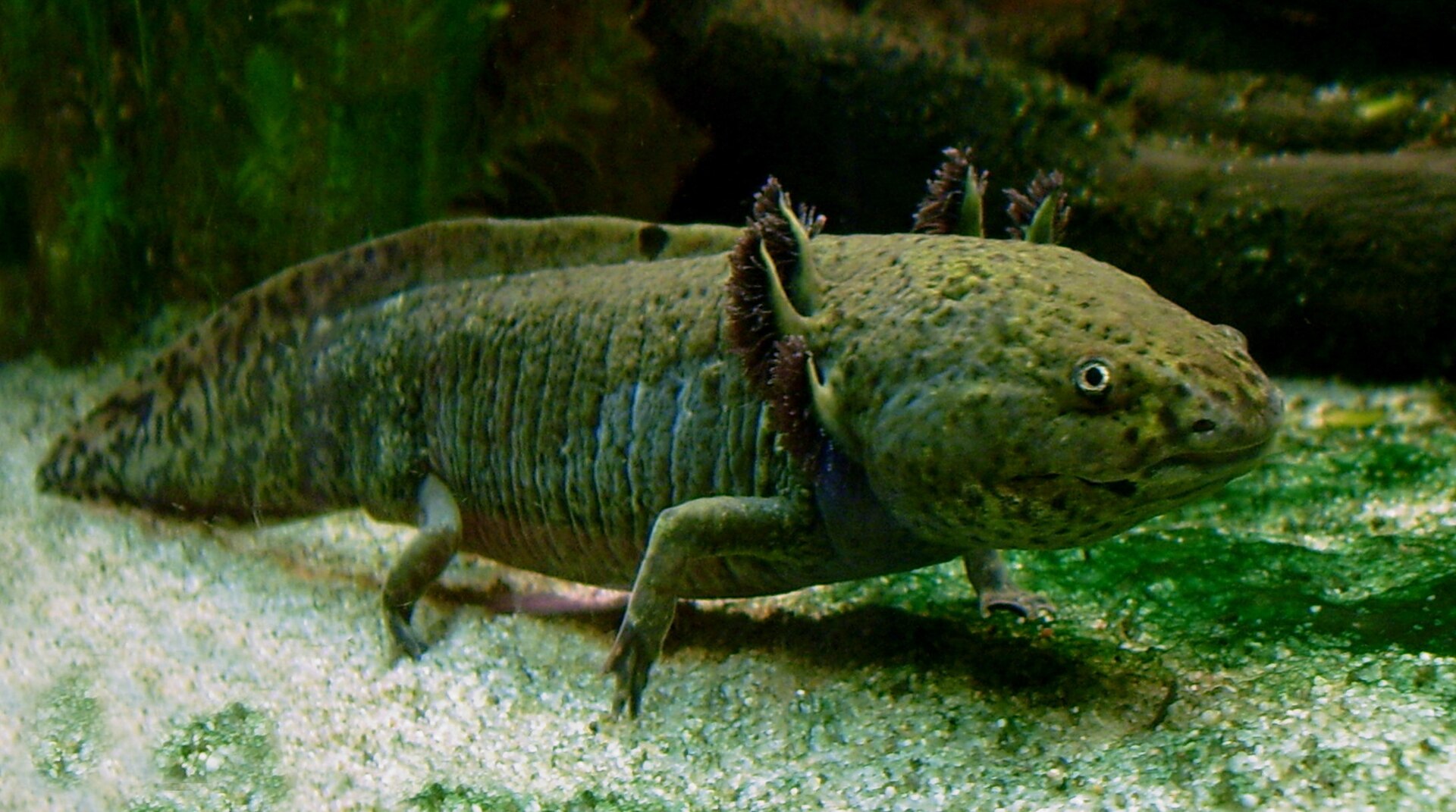

Adaptations
Eyes are reduced and covered by skin, while chemical, mechanical, and electrical cues help the animal navigate and locate food. External gills, slender limbs, unpigmented skin, and a low metabolic rate suit a cool cave system with scarce resources.
Behavior and daily life
Olms move slowly through submerged passages and shelter among rocks and sediment. They may go long intervals between meals, and their reproductive cycle is slow, so populations cannot quickly replace adults lost from a cave-water system.
Conservation
Current profile labelVulnerable
Groundwater pollution, altered water flow, cave disturbance, and collection threaten a species with a restricted subterranean range. Because contamination can travel beyond a visible cave entrance, protection depends on managing the wider karst watershed.
An olm can survive very long periods without feeding by lowering activity and relying on an exceptionally slow metabolism.