
Water-linked life cycles
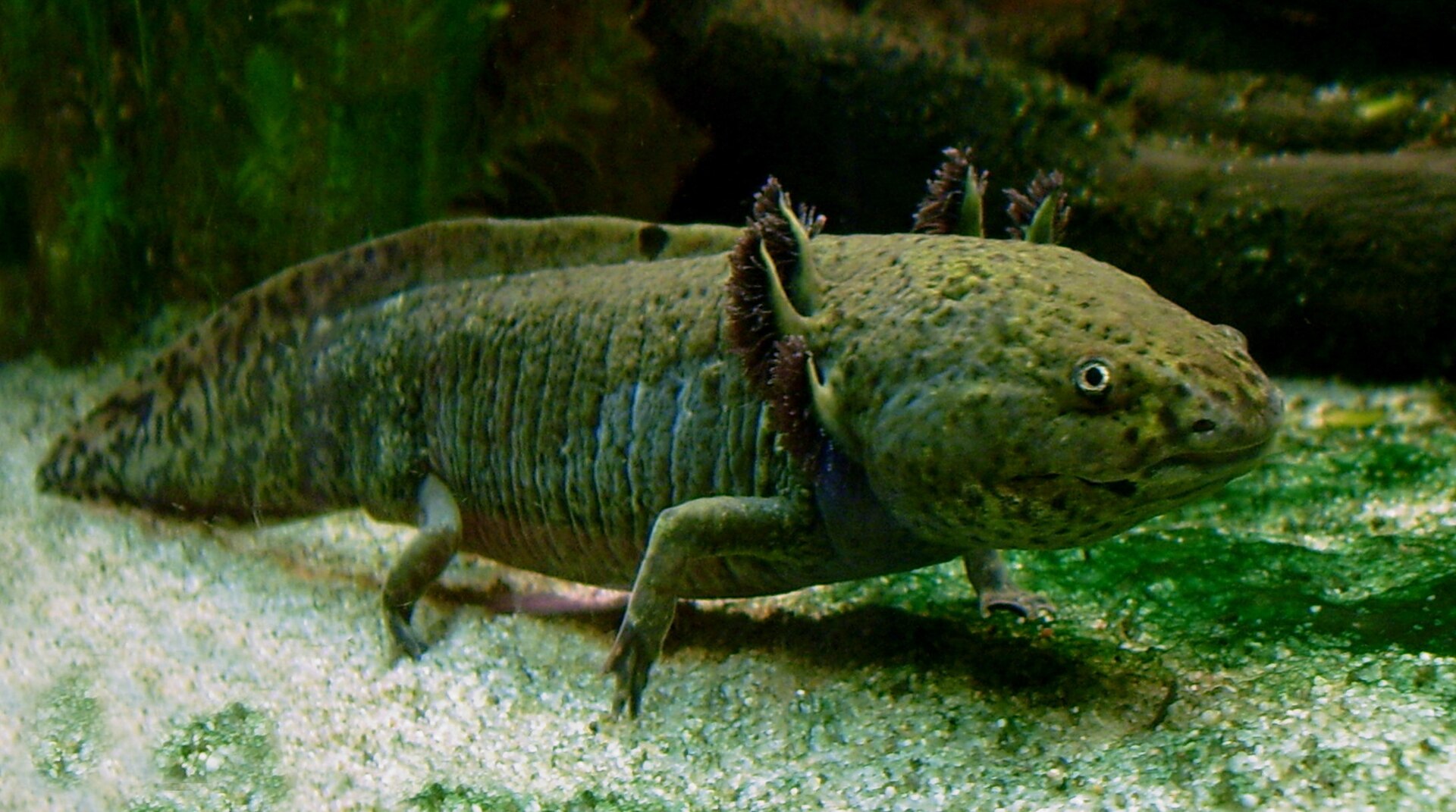
Many amphibians hatch as aquatic larvae and later change body form, although species such as the axolotl retain aquatic juvenile features as adults.
amphibian species list
Meet amphibians shaped by ponds, streams, caves, wetlands, cloud forests, and seasonal water.
Amphibians are vertebrates with permeable skin and life cycles closely connected to water or moisture. Frogs, toads, salamanders, newts, and caecilians are the main living groups.
Many amphibians hatch as aquatic larvae and later change body form, although species such as the axolotl retain aquatic juvenile features as adults.
Moist skin can contribute to gas exchange, making water quality, humidity, temperature, and disease especially important.
Because amphibians respond strongly to environmental change, their presence and breeding success can reveal information about habitat conditions.
The list is rendered in the page for browsing and search discovery. A reviewed label marks animals with a dedicated picture and source-backed profile.
Every profile includes an original overview, adaptations, behavior, conservation context, sources, and an image license record.
Amphibian

Amphibian

Amphibian

Amphibian

Amphibian
Frogs, toads, salamanders, newts, and caecilians are amphibians.
Yes. An axolotl is an aquatic salamander that normally retains external gills into adulthood.
No. Amphibians and reptiles are separate vertebrate groups with different skin, reproduction, and development patterns.